
Vocal remover
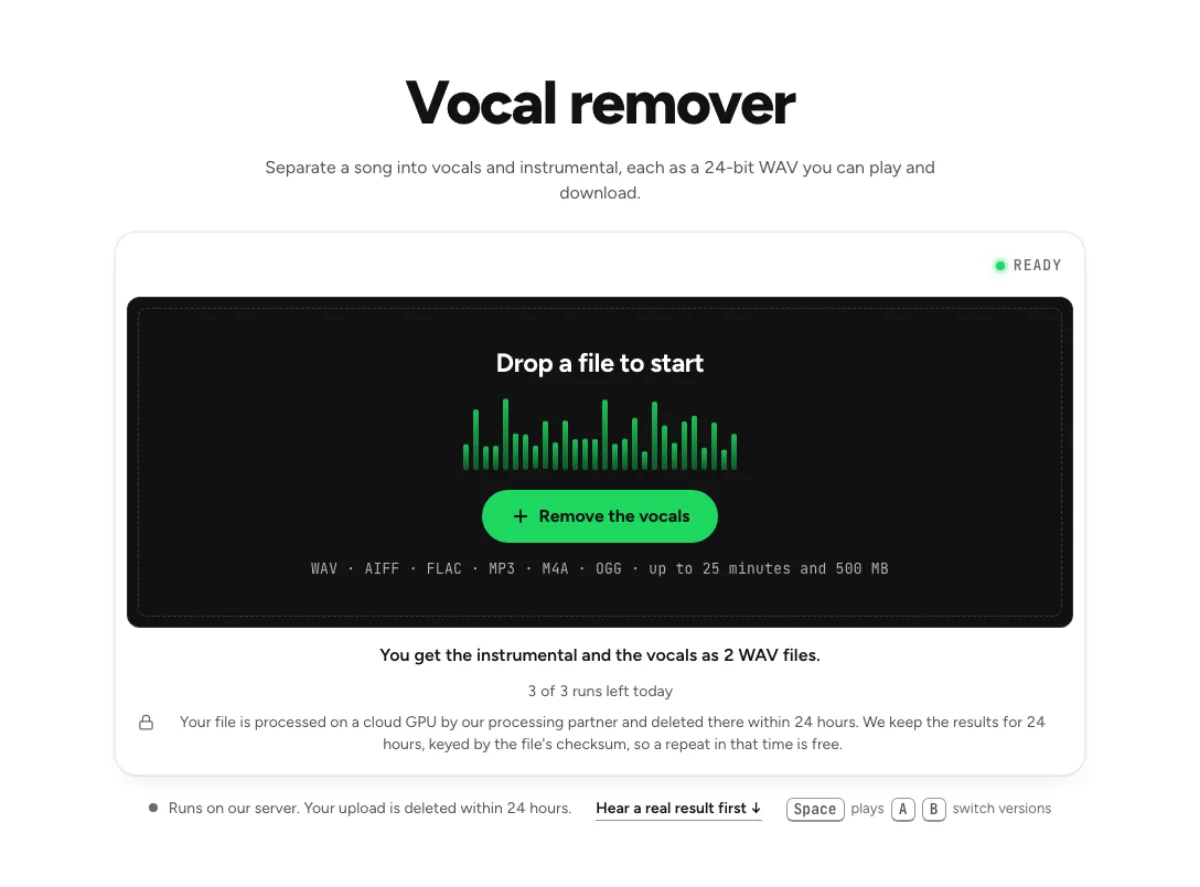
Separate a song into vocals and instrumental, each as a 24-bit WAV you can play and download.
- Runs on our server. Your upload is deleted within 24 hours.
- Space plays AB switch versions
You get the instrumental and the vocals as 2 WAV files.
WAV · AIFF · FLAC · MP3 · M4A · OGG · up to 25 minutes and 500 MB
Checking your runs
Your file is processed on a cloud GPU by our processing partner and deleted there within 24 hours. We keep the results for 24 hours, keyed by the file's checksum, so a repeat in that time is free.
How it works
- What it does
- Separate a song into vocals and instrumental, both as 24-bit WAV. Listen to each, mix them, or send the result to mastering.
- Model
- A separation model on a cloud GPU splits the song; two stems are the average of a two-stem and a six-stem pass. Measured on six songs with every part known (SDR, higher is better; the untouched song scores −3 to −5 dB): vocals 15.3 dB and instrumental 18.5 dB on average; drums 14.6, bass 13.3, guitar 11.5 dB; piano 4.7 dB as a quiet layer, 12 to 17 dB when it leads. Nothing is clipped, and the files keep your sample rate. Model names and licences
- Output
- One 24-bit WAV per stem at your file's own sample rate. A stem that peaks past full scale (a loud master) comes as 32-bit float instead, so nothing is clipped. Vocals and instrumental add back up to your file at −108 to −114 dB on our test songs; the song without a stem is made from the others and adds back up with it exactly.
- Time
- About 15 s of GPU time for a 45-s excerpt at standard quality, plus 1 to 3 minutes the first time while the model starts.
- Your file
- Your file is processed on a cloud GPU by our processing partner and deleted there within 24 hours. We keep the results for 24 hours, keyed by the file's checksum, so a repeat in that time is free.
Separate vocals and instrumental as WAV files
Two stems, both kept
You get the instrumental and the vocals as separate WAV files. The instrumental is the headline result, and the vocal stays available for checking a melody, building a rehearsal reference or preparing an edit. The result panel shows the actual sample rate and bit depth; hot output can use floating-point WAV to retain headroom. Use the vocal remover when the job is one singer against one complete backing track. It estimates a vocal layer from the finished mix; it cannot recover the studio session. Choose the instrumental for singing practice, and keep the vocal file when a lyric, entrance or melody needs checking.

One playhead, three versions
Switch between Instrumental, Vocals and Original while the song keeps playing. You hear exactly where the singer was and what the removal left behind. Listen to a verse with exposed words, the busiest chorus and a phrase ending in reverb. These reveal different problems: consonants can leave short traces, layered singers can smear, and reverb can remain behind the voice. A clean verse alone is not enough evidence that the whole backing track is ready.

Mix before you download
Adjust the mix opens volume, pan, mute and solo for both stems. Export the result as WAV or FLAC, for example with the vocal 12 dB down instead of gone. Start with both faders at their normal level, then lower the voice until it supports your task. A faint guide can help an unfamiliar chorus without competing with your own singing. Keep the original file and the downloaded stems so a later change of balance does not require another separation.
People who remove vocals, and what for
Mashup DJs
Take the instrumental of one record and the vocal of another, each as a separate WAV with the same 44.1 kHz rate. A DJ can line the extracted voice up with a new backing and check phrasing before making a public mix. Match the song's tempo and key in the appropriate tools afterwards; vocal removal does not beat-match the new arrangement. Listen for accompaniment leaking into sustained notes before building a transition around them.
Songwriters
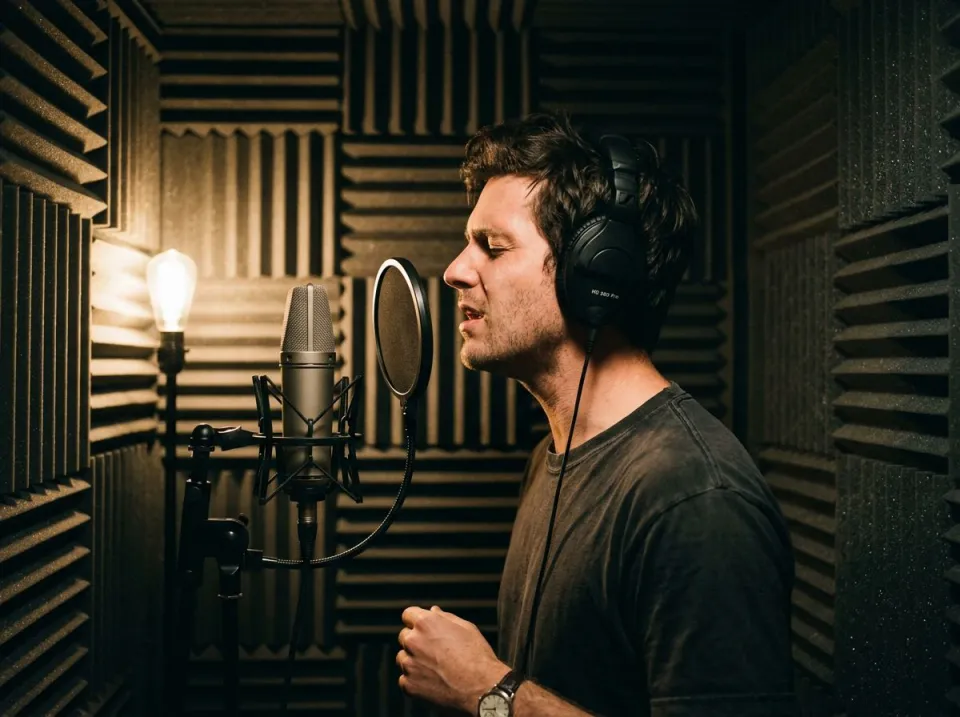
Try a new topline over the existing track with the old melody out of the way, then keep the vocal file to compare. For songwriting, the instrumental becomes a reference for trying another melody or a different phrasing. Record your ideas on a separate track and compare them with the original vocal only when needed. Treat the existing harmony as a musical reference, and secure permission before releasing an adaptation of someone else's recording.
Music teachers
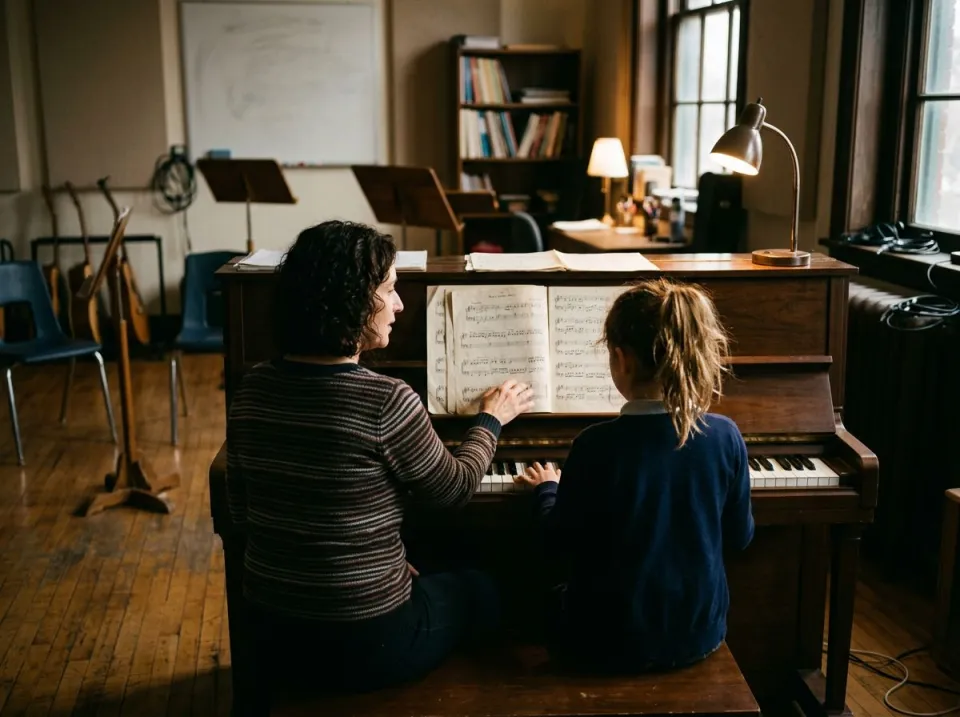
Play a class the backing without the singer so students carry the melody themselves. A teacher can alternate between a full performance and a voice-free accompaniment during a lesson. Use the vocal file to demonstrate entrances, breath placement or rhythm, then return to the backing for the student's attempt. Set a comfortable listening level first; isolated voices can sound quieter than a mastered full mix.
How to remove vocals from a song
Drop the song
Use WAV, AIFF, FLAC, MP3, M4A or OGG, up to 25 minutes and 500 MB. Your song goes to Replicate, our processing partner, which deletes the upload within 24 hours. Choose the cleanest complete copy you already own, rather than a screen recording or a heavily compressed repost. Avoid adding EQ or a limiter before the vocal remover. If you only need one section, trim that section from a copy and keep the full original unchanged for later comparison.
Follow the progress panel
The panel shows upload, queue and processing. The first run after a quiet hour takes 1 to 3 minutes while the model starts, and later runs take seconds. The progress panel covers uploading, waiting for cloud processing and collecting the output. A slow start does not necessarily mean the file failed. Keep the page available until the result appears, and read any error before trying again; repeatedly submitting the same job does not make a queue move faster.
Pick a version
Press play and switch between the three versions. Then click Download instrumental or Download vocals, or send the instrumental to mastering. Compare the instrumental with the original at the same musical moment, then listen to the isolated voice as well. If an important guitar or snare landed in the vocal file, complete removal may sound hollow. Try a lower vocal level in the mixer and choose the balance that works in the full arrangement.
Cost, privacy and time of vocal removal
Can I remove vocals from a song for free?
Yes, basic two-stem separation is available within the free allowance. The catalog currently allows 3 cloud runs a day without an account or 10 a month for a signed-in free account. A repeat can be free while the identical result is still cached; changing the source or configuration can be a new run. Free access is best used on a representative song first. Listen to a difficult chorus before spending more of an allowance on a long batch. Downloading a result does not require buying it again.
Where does my song go when I remove the vocals?
The audio is uploaded for cloud processing through our external processing infrastructure; vocal removal is not performed entirely on your device. Results can be temporarily cached to avoid repeating an identical job. Save the files you need while they are available and check the Privacy Policy for the current handling and retention details. If you require an offline workflow for sensitive recordings, do not submit them to this cloud tool. Choose an appropriate local process instead, and keep your own source backup.
How long does it take to remove vocals?
Processing has several stages: upload, waiting for the model, separation and collecting the result. A short excerpt can process quickly after the model is running, while an idle model may need extra time to start. File length, source size and service load all affect the total, so a sample timing is an estimate rather than a guarantee. Judge completion from the result panel rather than repeatedly refreshing or resubmitting. Once a result is ready, spend time comparing the backing and voice before deciding whether another configuration is worthwhile.
What should I check after using this vocal remover workflow?
Listen to vocals and instrumental, rather than judging just one file. The difficult cases include reverb, layered harmonies and instruments that resemble a voice. Compare an exposed passage, a busy section and the tail of a sustained sound at the same musical moment. A result can work for practice while being too rough for an isolated production use. Choose based on the sound you will actually deliver, and keep the original nearby when a note, word or effect is uncertain.
What source recording should I use?
Start with the cleanest version you already have and avoid repeated lossy conversions. Saving a damaged recording as WAV does not restore the detail it lost. Excessive EQ, clipping or added reverb before separation can make the task harder. Keep the original and work on a copy so later comparisons remain meaningful. For a live rehearsal, save the backing locally and test it on the actual speaker or karaoke system before the session. A quiet headphone check can miss vocal traces that become obvious in a reflective room. Keep a full-mix reference nearby so the band can verify the intended arrangement.
How do file length, plan access and cloud runs work?
The cloud processing limit is up to 25 minutes per file, with file size and mode access also checked before a run starts. The current catalog allows 3 runs daily anonymously, 10 monthly for signed-in free users, 80 monthly on Pro and 150 on Pro+. Each new file and processing configuration uses the relevant allowance; an identical result can be free while cached. Check the current pricing and the uploader before processing a batch. Downloads are part of the result, not a separate per-file unlock.
Is this separation performed entirely on my device?
No. This is cloud separation: audio is uploaded for processing on external infrastructure. Browser playback, comparison and some exports happen locally after the results arrive, which does not make the separation itself offline. Check the Privacy Policy before submitting sensitive material, and use an appropriate local workflow if audio must stay entirely on your device. Download useful outputs while available; temporary results and cached repeats are not a permanent archive.
Can I publish or share the separated result?
Separation changes the balance of a recording, not its ownership or the permissions attached to it. Use material you own or are otherwise entitled to adapt, and arrange the permissions needed for your intended publication. A separated result does not include a licence to a commercial song, performance or soundtrack. For your own project, keep the source, an untouched separation and a separate delivery copy. Listen again in the complete mix before sharing; an acceptable rehearsal reference may reveal artefacts when exposed alone.
Learn how
Guides and tutorials that use this tool, with real screens and real numbers.
- How to remove vocals from a song for karaokeTake the singer out of a finished song, keep the band at its original level, check the result by ear and leave a faint guide vocal if you want one.
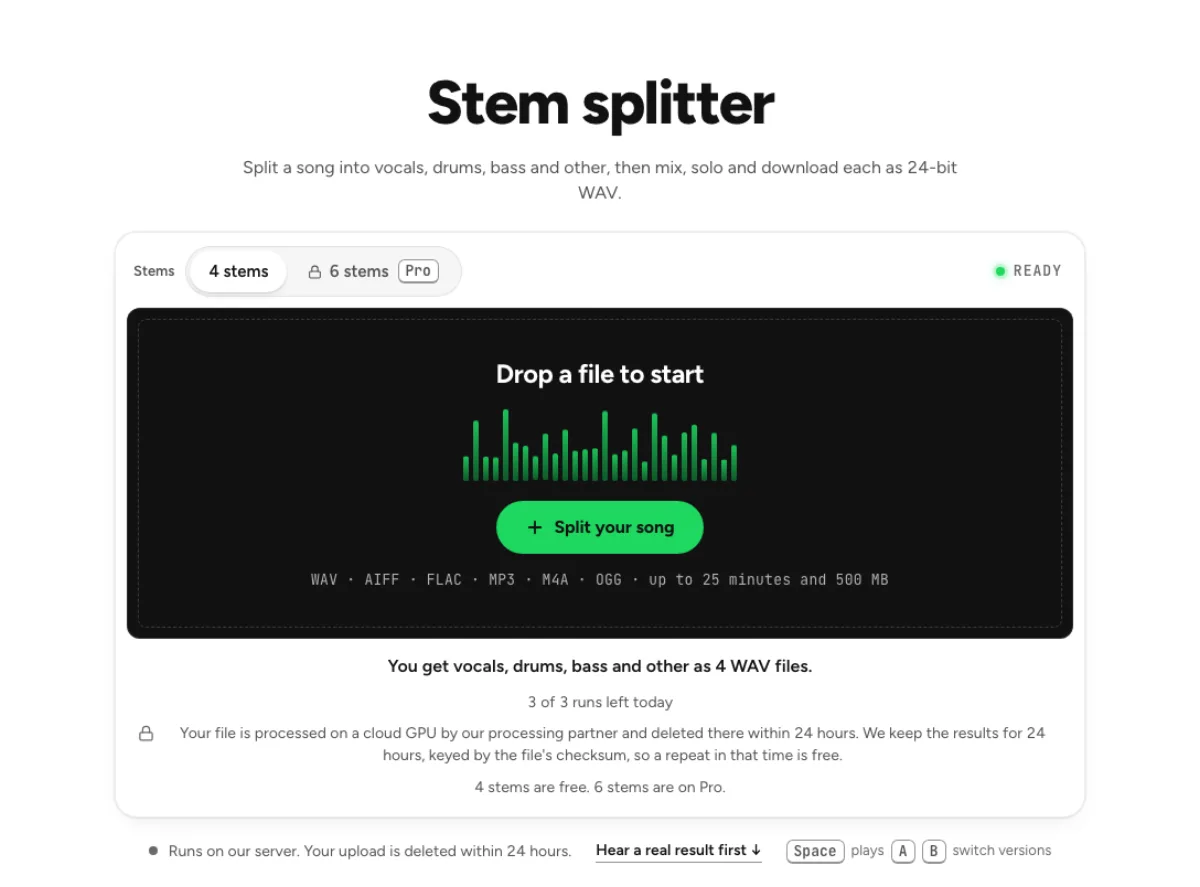 How to Split a Song into Vocals, Drums and BassWhat four and six stems are, how clean each stem comes out on our measurements, and how to mix, loop and export them without leaving the browser.